Short backgammon - Backgammon Game
About the Game
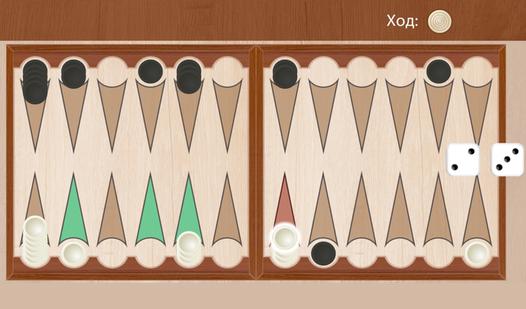
Short backgammon is a board game for two players on a special board divided into two halves. The birthplace of this game is not exactly known, but it is known that people have been playing this game for more than 5,000 years, which there is historical evidence. So, the oldest of the backgammon boards was found on the territory of Iran and dates back to about 3000 BC. An analogue of this game was found in the tomb of Pharaoh Tutankhamun. The rules of the game of backgammon are simple and novice players will easily master them, but nevertheless, in order to win, you need logical thinking and of course luck. The Backgammon game consists of a special board, 30 checkers of two different colors and two dice dice. 2 players take part in the game. The game can be played with artificial intelligence, together with another person on the same device, or with an opponent online in multiplayer mode.
Backgammon Game - Mechanics and Core Game Loop
Backgammon is a two‑player board game mechanic combining luck and strategy. Each player has 15 checkers placed on 24 narrow triangles (points) alternating in color. Movement is determined by rolling two dice: you move checkers forward according to the rolled numbers, landing on open points (not occupied by two or more opposing checkers). Hitting an opponent's lone checker sends it to the bar; that checker must re‑enter before any other moves. The goal is to move all your checkers into your home board (the last quadrant) and then bear them off — removing them from the board based on dice rolls. The first player to bear off all checkers wins. Standard scoring includes single wins, gammons (opponent hasn't borne off any checkers), and backgammons (opponent still has a checker on the bar or in your home board). Optional doubling cube multiplies stakes: players can offer to double the game value before rolling. Unlike purely chance games, Backgammon rewards positional strategy, blocking opponent moves, building primes (consecutive occupied points), and knowing when to run or anchor. Core mechanics include opening moves, hitting strategies, and risk management when leaving blots (exposed single checkers). Perfect for players who enjoy the tension of dice randomness blended with deep tactical decisions.